
Hvac Inspection often starts with small signs. Most people in seattle do not think about their HVAC system until something feels off.
Introduction
Most people in seattle do not think about their HVAC system until something feels off. Maybe the house takes longer to warm up, or the air just does not feel as comfortable as it used to.
It is not always a clear problem. Sometimes everything still works, just not quite the same. That is usually when an HVAC inspection starts to make sense.
You are not fixing anything yet, just trying to understand what is going on before it gets worse.
Basic Cost
HVAC inspection costs in seattle are usually fairly straightforward. A basic check of the system and airflow is typically on the lower end.
If the inspection involves more detailed testing or checking hidden components, the cost can be a bit higher. It depends on how much needs to be looked at.
Most people see it as a way to catch small issues before they turn into larger repairs.
Common Situation
A common situation is someone noticing uneven heating. One room feels fine, while another stays cooler even with the thermostat set higher.
When we inspect the system, it is often something like airflow issues, minor wear, or a system that is starting to age.
In seattle, this tends to show up during colder months when the system is being used more consistently.
What to Expect
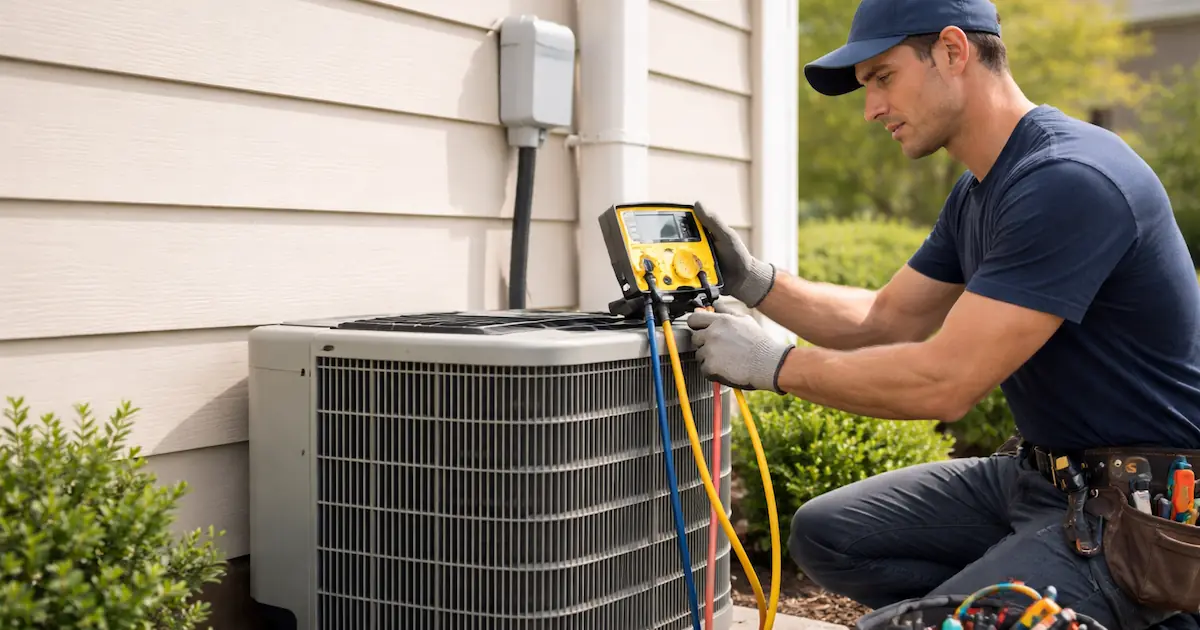
During an HVAC inspection, the system is checked to see how well it is running. That includes looking at the unit, airflow, and general performance.
If something seems off, it is usually explained in simple terms. Most people are not looking for technical details, just a clear idea of what is working and what is not.
Sometimes no major issues are found, which gives peace of mind. Other times, small adjustments are recommended to keep things running smoothly.
Local Note
Seattle homes rely more on heating than cooling, but that is slowly changing as summers feel warmer. Systems are starting to handle both more often.
The damp air here also affects how indoor comfort feels. Even when the temperature is right, airflow and humidity can make a difference.
That is why inspections tend to focus not just on function, but how the system actually feels day to day.